

Photovoltaic AI Trend 2026
Residential solar: how Zendure's AI moves from passive management to energy anticipation
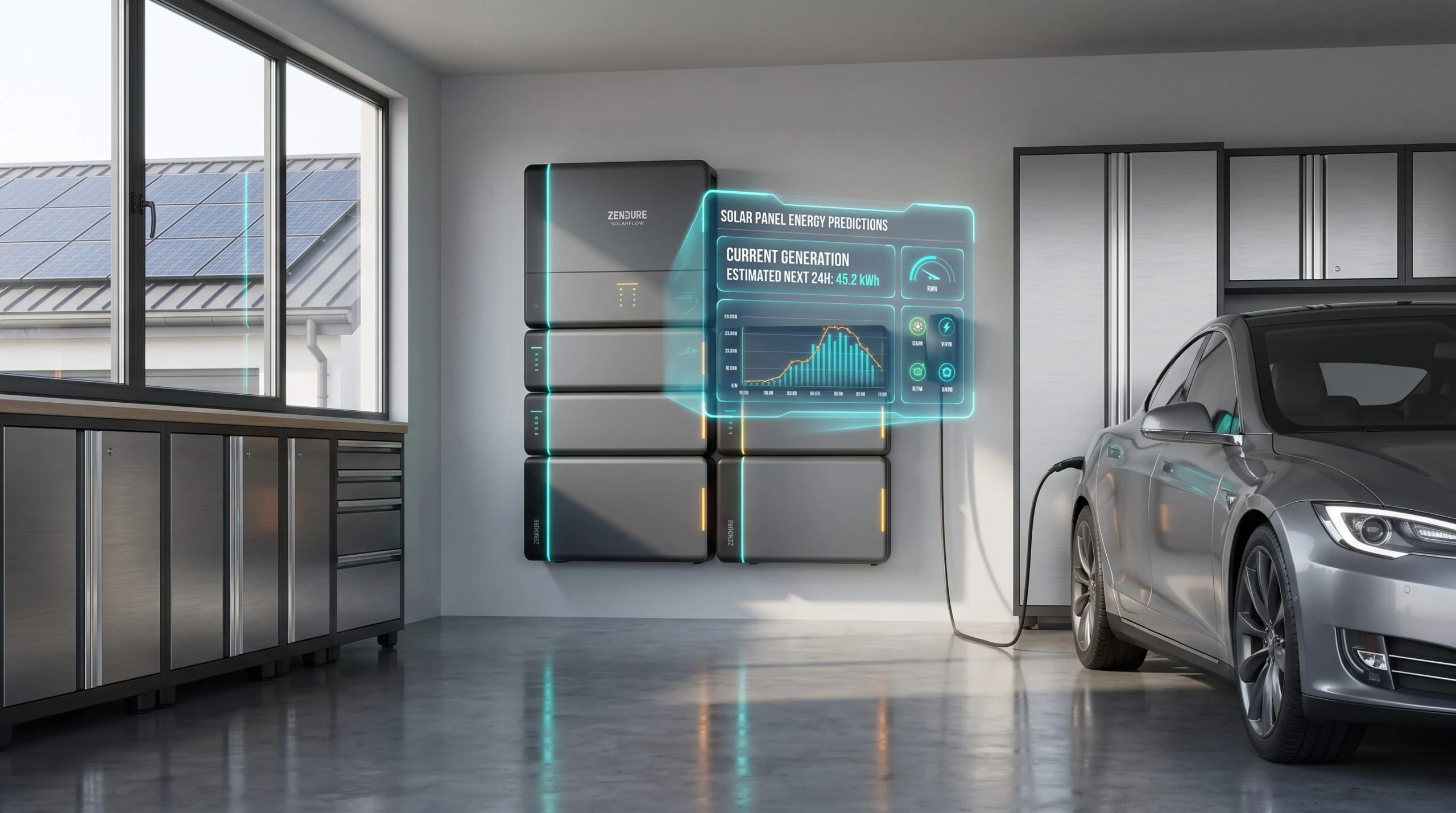
For years, solar energy management has been limited to purely passive decisions: charge when the sun shines, feed in when storage is full. Faced with dynamic tariffs and weather intermittency, this logic is now outdated. With its intelligent ecosystem and predictive algorithmic technology, Zendure is changing the game: AI no longer waits for energy to arrive, it anticipates its production and value over 48 hours. Optimising solar panels with artificial intelligence.
1. The limit of real-time: why passive storage is no longer enough
The classic domestic solar model is based on a major economic flaw:
The battery saturates from 10 am with the first spring rays.
At 1 pm, at the peak of production, your panels are producing at full power, but your storage is full: the surplus is fed in at a low price or curtailed.
That same evening or the next morning in the rain, the battery is empty: you buy your electricity from the grid at the high price.
Managing energy at the instant T prevents any profitability strategy. To maximise the autonomy and amortisation of the installation, the system must know the immediate future.
2. The Zendure predictive brain: the intersection of 3 strategic pillars
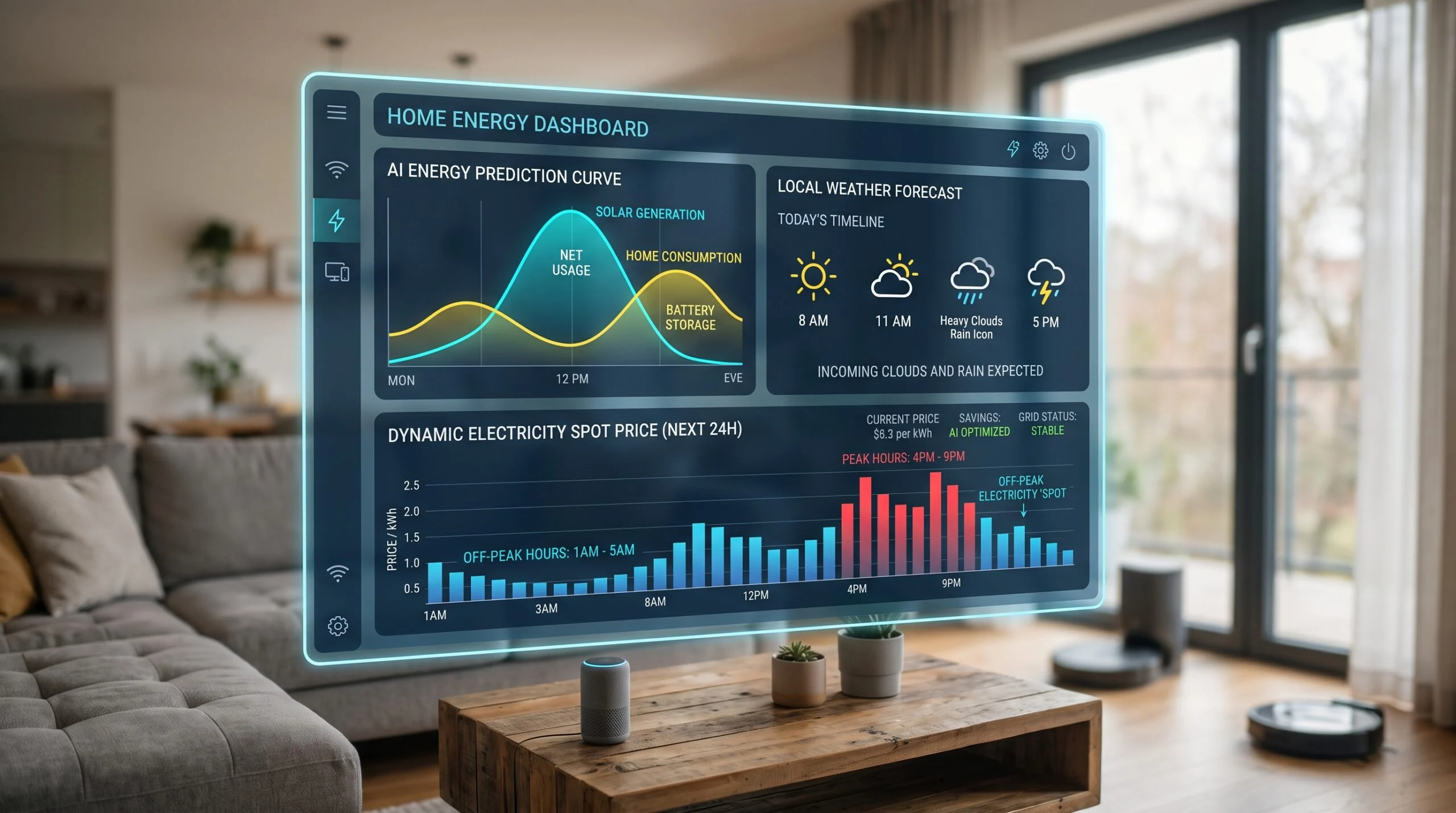
Unlike ordinary regulators, the new generation of energy managers developed by Zendure (embodied in particular by the SolarFlow Hyper ecosystem and ZENKI algorithms) continuously runs machine learning models based on three critical sources of information:
Satellite Meteorology
By downloading hourly solar irradiation and cloud cover data, the system knows the day's production curve in advance. If a peak in sunshine occurs at noon, it intentionally throttles morning charging to leave capacity available.
The obvious impact of artificial intelligence on a new niche
Dynamic Grid Tariffs
Thanks to the integration of spot electricity prices (such as EPEX Spot or flexible off-peak formulas), the system charges the battery from the grid when electricity costs almost nothing (or even negative prices) and discharges it at the exact moment of the price peak.
The opportunities to create a completely autonomous installation disconnected from the electrical grid are becoming more realistic every day, especially on an island like Leros.
Household Habits
Via the connected Shelly Pro 3EM or Zendure Smart Meter, the algorithm learns the recurring schedules of your daily life (washing machine, heat pump, cooking, car charging) and plans the necessary reserves without interruption. Machine learning applied to the household's consumption habits.
3. Comparison table: Passive Management vs. Predictive Management by Artificial Intelligence
Situation
4. A typical day driven by the algorithm: effortless autonomy
03:30 (Night) — Collection and planning: AI retrieves hourly electricity prices and satellite forecasts for the day. It establishes the energy roadmap for the next 24 hours.
08:30 (Morning) — Priority to immediate needs: Production begins. The system covers the household's baseline consumption and only stores the bare minimum, reserving battery capacity to absorb midday sun.
12:45 (Midday) — Zero clipping: The battery, not yet saturated, absorbs 100% of the peak production without feeding any back to the grid at a loss.
19:00 (Evening) — Peak hour shield: Grid electricity prices soar. The installation switches to maximum discharge to power the entire house, completely eliminating the peak on your bill.
By replacing manual home automation rules with artificial intelligence capable of predicting weather, consumption, and dynamic pricing, Zendure increases effective self-consumption by an additional 15 to 25%. Storage is no longer an inert battery: it becomes an automated economic arbitrator serving your energy independence.